A Guide to One of the Most Important Jobs in Railroad Construction
A Track Laborer helps build, repair, and maintain railroad track and the surrounding infrastructure that keeps rail operations moving. This is a hands-on field position that supports railroad construction crews with material handling, tools, track repairs, maintenance work, and jobsite safety.
For many people, Track Laborer jobs are one of the best ways to start a career in railroad construction. The role teaches the basics of track work, crew communication, field safety, tools, materials, and what it takes to work around railroad infrastructure.
Capital Railroad Contracting’s Track Laborer page describes Track Laborers as crew members who support the building, repair, and maintenance of railroad track and surrounding infrastructure. Typical duties include carrying and placing materials, assisting with tie and rail handling, using hand and power tools, supporting repairs or new construction, keeping job sites organized, and following crew leadership and safety protocols.
What Is a Track Laborer?
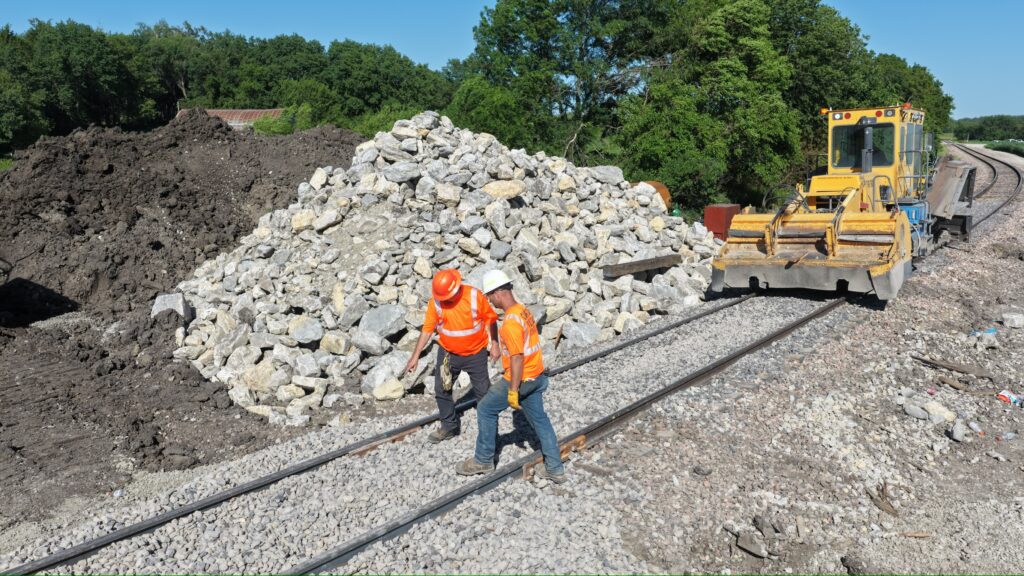
A Track Laborer is a railroad construction worker who helps crews maintain and improve track systems. The job is physical, active, and team-based. Track Laborers often work outdoors, around heavy materials, specialized equipment, trucks, tools, and changing jobsite conditions.
Track Laborers may work on projects involving:
- Railroad track construction
- Track maintenance and repair
- Maintenance of Way work
- Tie and rail replacement
- Ballast and drainage support
- Switches, crossings, and turnouts
- Industrial rail sidings
- Yard tracks
- Emergency railroad repairs
- Bridge and structure support when needed
A Track Laborer is not just “general labor” with a different name. Railroad track work is specialized. The materials, tools, safety expectations, and work environment are unique to the rail industry.
What Does a Track Laborer Do Every Day?
The exact work can change depending on the project, crew, location, weather, and customer needs. One day may involve helping replace track materials. Another day may involve supporting new construction, cleaning up a work zone, assisting an equipment operator, or helping prepare a jobsite for repair work.
A typical Track Laborer may help with:
Carrying and Placing Track Materials
Track Laborers help move and position materials used in railroad construction and maintenance. This may include ties, plates, anchors, spikes, tools, small equipment, and other jobsite materials.
Assisting With Tie and Rail Work
Railroad ties and rails wear over time and may need to be replaced, repaired, or adjusted. Track Laborers help experienced crew members during tie replacement, rail handling, and related repair work.
Using Hand Tools and Power Tools
Track Laborers may use tools to support construction, repair, cleanup, and material placement. Tool use is a major part of learning the trade.
Supporting Equipment Operators
Railroad construction crews often use specialized equipment. Track Laborers help keep the work moving by supporting operators, preparing materials, watching surroundings, and following crew instructions.
Keeping the Jobsite Clean and Organized
A clean, organized jobsite helps the crew work safely and efficiently. Track Laborers help remove debris, organize tools, stage materials, and maintain safe work areas.
Following Safety Procedures
Railroad work requires constant attention to safety. Track Laborers must listen to instructions, stay alert, follow job briefings, use required protective equipment, and understand how to work around tools, equipment, and rail infrastructure.
Is a Track Laborer an Entry-Level Railroad Job?
A Track Laborer position can be an entry point into railroad construction, especially for people who are dependable, safety-minded, willing to learn, and ready for physical outdoor work.
The Bureau of Labor Statistics notes that workers in railroad occupations typically need a high school diploma or equivalent and several months of on-the-job training. Some railroad roles require more experience, but Track Laborer and field labor positions can be a good starting place for people coming from construction, farming, landscaping, warehouse work, manufacturing, military service, trucking, or other hands-on backgrounds.
Capital Railroad’s railroad construction jobs page lists Track Laborers among its field roles, along with Equipment Operators, Foremen/Crew Leads, Heavy Equipment Mechanics, CDL Drivers/Support Operators, and Bridge Crew roles.
What Skills Does a Track Laborer Need?
A good Track Laborer does not need to know everything on day one. But they do need the right attitude and work habits.
Important skills and traits include:
- Dependability
- Safety awareness
- Physical stamina
- Willingness to travel
- Ability to follow instructions
- Teamwork
- Communication
- Comfort working outdoors
- Ability to work around tools and equipment
- Attention to detail
- Willingness to learn from experienced crew members
Track Laborers work as part of a crew. That means one person’s attitude, attendance, and safety habits affect everyone else.
What Kind of Work Environment Should Track Laborers Expect?
Track Laborer work is not a desk job. It is outdoor, hands-on field work.
A Track Laborer should expect:
- Physical labor
- Outdoor weather conditions
- Uneven ground
- Heavy materials
- Early mornings
- Travel depending on the project
- Long days when work requires it
- Tools, trucks, and equipment
- Crew-based work
- Safety briefings and jobsite communication
Some projects may be close to home. Others may require travel. Railroad construction work happens where the track is, so flexibility matters.
Capital Railroad’s careers page lists paid travel time among its benefits, along with competitive pay, health insurance, dental, vision, life insurance, paid time off, 401(k), and 401(k) matching.
Is Track Laborer Work Physically Demanding?
Yes. Track Laborer work is physically demanding. It may involve lifting, carrying, walking on ballast or uneven surfaces, bending, standing, using tools, working outdoors, and helping move materials.
The work can be hot, cold, dusty, muddy, loud, and tiring. It requires focus and effort. But for people who like working with their hands and being part of a crew, it can also be rewarding.
A strong Track Laborer is usually someone who:
- Shows up ready to work
- Takes safety seriously
- Listens before acting
- Helps the crew without being asked every time
- Learns from correction
- Handles tough conditions
- Keeps a good attitude
- Takes pride in work that lasts
What Safety Training Do Track Laborers Need?
Track Laborers working on or near railroad track must understand jobsite safety and on-track safety expectations. Railroad work has serious safety requirements because crews may work around track, equipment, tools, vehicles, and rail infrastructure.
The Federal Railroad Administration explains that contractor employees performing roadway worker duties on or near track are included under roadway worker protection expectations, and contractors are responsible for on-track safety and required training for their employees. Federal roadway worker protection rules also require railroads subject to the regulation to maintain an on-track safety program.
For applicants, the simple version is this: safety is not optional in railroad construction. Track Laborers must be willing to learn procedures, follow instructions, and stay aware of their surroundings every day.
What Is the Difference Between a Track Laborer and Maintenance of Way Worker?
A Track Laborer is often part of a Maintenance of Way, or MOW, crew.
Maintenance of Way refers to the inspection, repair, construction, and ongoing maintenance of railroad track and related infrastructure. Capital Railroad describes its Maintenance of Way services as including tracks, bridges, signals, and related components.
A Track Laborer may perform MOW work, but the title usually refers to the hands-on crew member role. Maintenance of Way is the broader category of work.
In simple terms:
Maintenance of Way is the type of railroad work.
Track Laborer is one of the crew roles that helps perform that work.
What Is the Difference Between a Track Laborer and an Equipment Operator?
Track Laborers and Equipment Operators often work together, but they are not the same role.
A Track Laborer supports the crew with materials, tools, repairs, cleanup, and general track work.
An Equipment Operator runs machines used in railroad construction and maintenance.
Many people start as Track Laborers, learn the work, gain experience, and may eventually move toward equipment operation, crew leadership, bridge work, CDL support, mechanics, safety, or other specialized roles.
Can a Track Laborer Become a Foreman?
Yes. A Track Laborer role can become the first step in a longer railroad construction career.
A possible career path may look like:
Track Laborer → Experienced Crew Member → Equipment Operator → Foreman or Crew Lead → Superintendent or Project Leadership
Not every person follows the same path. Some people move into equipment operation. Some become bridge crew members. Some become mechanics, CDL drivers, safety leaders, or project supervisors.
The first step is learning the work, showing up, working safely, and becoming someone the crew can count on.
Who Is a Good Fit for Track Laborer Jobs?
Track Laborer work can be a good fit for people who like physical work, being outdoors, and working with a crew.
Strong candidates may come from backgrounds such as:
- Construction
- Farming
- Landscaping
- Excavation
- Manufacturing
- Warehousing
- Trucking
- Military service
- Mechanics
- Skilled trades
- General labor
- Outdoor work
Railroad experience can help, but the right work ethic matters. A dependable person who listens, learns, travels, and works safely can build a strong foundation in the railroad construction industry.
What Should You Put on a Track Laborer Resume?
If you are applying for a Track Laborer job, your resume should focus on practical experience and reliability.
Good things to include:
- Outdoor labor experience
- Construction experience
- Hand tool or power tool use
- Equipment exposure
- Material handling
- CDL, if you have one
- Mechanical skills
- Safety training
- Travel availability
- Strong attendance
- Crew-based work experience
If you do not have railroad experience, do not hide it. Instead, show why your background proves you can handle the work.
Example Resume Summary for a Track Laborer Applicant
Dependable laborer with experience in outdoor physical work, hand tools, material handling, and crew-based job sites. Comfortable working in changing weather conditions and willing to travel for railroad construction projects. Safety-minded, coachable, and ready to support track construction, repair, and Maintenance of Way crews.
Why Track Laborers Matter
Track Laborers do the hard work that helps keep railroad projects moving. They support the crews that build, repair, and maintain the physical infrastructure rail customers depend on.
Without Track Laborers, materials do not get staged, tools do not stay organized, crews slow down, and repair work becomes harder to complete safely and efficiently.
It is a demanding job, but it is also an important one. Track Laborers help build and maintain infrastructure that supports freight, industry, customers, and communities.
Apply for Track Laborer Jobs With Capital Railroad Contracting
If you are dependable, safety-minded, willing to travel, and ready for physical outdoor work, a Track Laborer position may be the right way to start or grow your railroad construction career.
Capital Railroad Contracting hires for railroad construction, track labor, Maintenance of Way, bridge work, equipment operation, CDL support, mechanic roles, and other field positions depending on project needs.
If you are ready to work hard, learn the trade, and join a crew that builds and maintains railroad infrastructure, apply today.
Apply for Track Laborer Jobs with Capital Railroad Contracting
FAQs About Track Laborer Jobs
What does a Track Laborer do?
A Track Laborer helps railroad construction crews build, repair, and maintain track and surrounding infrastructure. Duties may include carrying materials, assisting with tie and rail work, using tools, supporting repairs, cleaning jobsites, and following safety procedures.
Is Track Laborer a good entry-level railroad job?
Yes. Track Laborer roles can be a good entry point into railroad construction for dependable people who are willing to learn, work outdoors, travel when needed, and follow safety expectations.
Do you need railroad experience to be a Track Laborer?
Not always. Railroad experience can help, but many entry-level candidates come from construction, farming, landscaping, warehouse, manufacturing, trucking, military, or general labor backgrounds.
Is Track Laborer work hard?
Yes. Track Laborer work is physically demanding. It can involve lifting, carrying, walking on uneven ground, using tools, working outdoors, and supporting crews during long workdays.
Do Track Laborers travel?
Many railroad construction jobs require travel because projects are located wherever the track, bridge, yard, industrial siding, or rail facility needs work. Travel expectations can vary by role and project.
What skills help you get hired as a Track Laborer?
Helpful skills include outdoor labor, construction experience, hand tools, power tools, material handling, teamwork, safety awareness, equipment exposure, CDL experience, mechanical ability, and strong attendance.
What is the difference between a Track Laborer and a railroad worker?
“Railroad worker” is a broad term that can include many roles. A Track Laborer is a specific railroad construction role focused on supporting crews that build, repair, and maintain track infrastructure.
What is the difference between a Track Laborer and Maintenance of Way?
Maintenance of Way is the broader category of work that involves maintaining railroad track and related infrastructure. A Track Laborer is one of the crew roles that may perform Maintenance of Way work.
Can a Track Laborer become an Equipment Operator?
Yes. Many railroad construction careers start in field labor. With experience, training, and strong performance, a Track Laborer may be able to move toward equipment operation or other skilled roles.
How do I apply for Track Laborer jobs?
You can apply through Capital Railroad Contracting’s Track Laborer Jobs or Careers pages. Capital’s railroad construction jobs page encourages strong candidates to apply even if they do not see the exact job title they are looking for.